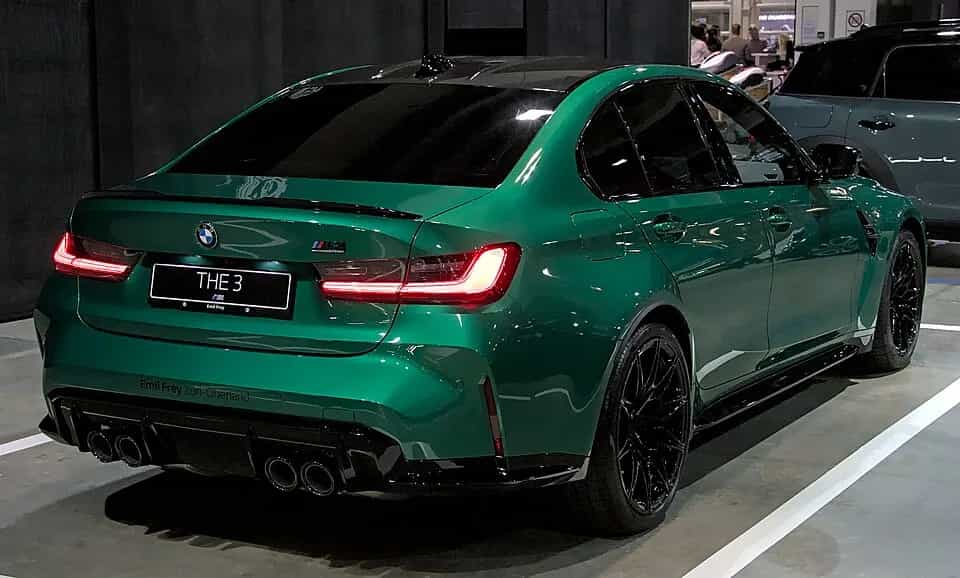
BMW M3 Sedan

Importing a used BMW M3 Sedan from the USA

The BMW M3 Sedan is the four-door heart of BMW's M division: a practical body shell with genuine supercar-baiting performance. The United States has always been one of the M3's most important markets, which means the US used pool is large, varied and often well specified, including a strong supply of manual-transmission cars that are harder to find in Europe. For German and EU enthusiasts, importing a used M3 Sedan from the USA can open up specific colour, trim and gearbox combinations that suit exactly what you want. USCar Trader is an independent broker for used vehicles only, so this page sticks to the facts: the generations, the engines, the known weak points and the import mechanics.

BMW m3-sedan – used car imported from the USA
Photo: Alexander Migl · CC BY-SA 4.0 · Wikimedia Commons

Production years and key changes

The M3 has worn several sedan bodies. The E90 generation (roughly 2008–2011) was the four-door companion to the E92 coupe and is famous as the only V8 M3. The F80 generation (2015–2018) switched to a turbocharged straight-six and was sedan-only for the M3 name. The current G80 generation (2021 onward) continues as a sedan, with an all-wheel-drive M xDrive option added from the 2022 model year alongside the traditional rear-drive car. Each generation is a distinct machine, and US-market cars closely mirror their European siblings mechanically, which makes them relatively clean imports.

What is under the hood

The E90 M3 uses the S65, a high-revving 4.0-litre naturally aspirated V8 producing around 414 hp and revving beyond 8,000 rpm, offered with a six-speed manual or the seven-speed M-DCT dual-clutch. The F80 M3 introduced the S55, a 3.0-litre twin-turbo inline-six with roughly 425 hp, or 444 hp in Competition form, again with a six-speed manual or seven-speed DCT. The G80 M3 uses the S58 twin-turbo straight-six: around 473 hp in the base car and 503 hp in Competition trim, with a six-speed manual reserved for the rear-drive car and a ZF eight-speed automatic in the Competition and M xDrive versions. Across the board these are among the most engaging engines in the class, and searching BMW M3 specs quickly shows how the character shifts from screaming V8 to torque-rich turbo six.

Trims and body styles

This page covers the four-door sedan specifically. Within that, the key distinctions are standard versus Competition, rear-wheel drive versus M xDrive (G80), and manual versus automatic. US cars are frequently loaded with the Executive package, carbon bucket seats, carbon-ceramic brakes and premium audio. The availability of the manual gearbox in the US, including on the current G80, is a genuine draw for purists importing to Europe.

What the US market offers

The American M3 used market is one of the deepest anywhere. You will find everything from cherished, low-mileage garage queens to harder-driven enthusiast cars, across all three sedan generations. Manual cars are comparatively plentiful. Because M3s attract knowledgeable owners, well-documented examples with service history and modification records are readily available, though you should be wary of track-abused or heavily modified cars. Typical mileage spans the full range, so patience pays when hunting a clean example.

Who this import is for

An imported M3 Sedan suits the driver who wants a specific configuration, a manual gearbox, or simply better value and choice than the local market offers. It is ideal for enthusiasts who understand the running costs of a high-performance BMW and who want a four-door that can do the school run and a track day. It is less suited to someone seeking low running costs or a relaxed cruiser.

Technical data and figures

ItemDetail (BMW M3 Sedan by generation)
Body style4-door sports sedan
E90 engineS65 4.0L NA V8
E90 powerapprox. 414 hp
F80 engineS55 3.0L twin-turbo I6
F80 powerapprox. 425–444 hp
G80 engineS58 3.0L twin-turbo I6
G80 powerapprox. 473–503 hp
Transmissions6-speed manual, 7-speed DCT, 8-speed auto (by gen)
DrivetrainRWD; M xDrive AWD on G80
E90 redlineapprox. 8,300 rpm
0–100 km/h (G80 Comp)approx. 3.9 s
Seating5
FuelPremium petrol
Production (sedan)E90 2008–2011, F80 2015–2018, G80 2021–

Reliability: trouble spots to check

Each generation has its own signature issues, so BMW M3 reliability depends on which car you buy. The E90 S65 V8 is known for connecting-rod bearing wear, so bearing history is a decisive factor; also watch the throttle actuators, VANOS units and rod-bearing-related noise. The F80 S55 is strong but the crank hub can slip under high torque, especially on tuned cars, so a reinforced or pinned hub is reassuring; charge pipes and oil-related maintenance also feature. The G80 S58 is the most robust so far, with only minor items such as occasional wastegate rattle reported. Across all three, brakes, tyres and clutches on manual cars are wear items to budget for. A car with documented BMW M3 common problems already addressed is worth paying for.

US vs. Europe differences

US M3s run amber side markers, headlights aimed for right-hand traffic and no rear fog lamp, with imperial instruments. Mechanically they are essentially the European car, which keeps the import straightforward. Some US infotainment and assistance features differ in default configuration. The biggest practical difference is simply availability: the US supplies gearbox and colour combinations that can be scarce in Germany.

How the import works

The route is: choose the car; verify VIN and origin with a history report and plant check; pay through secure escrow; book ocean freight (container is preferred for a valuable performance car) from a US port to a North Sea port; clear customs on arrival; complete the technical inspection and individual approval (TUEV/§21); and register. USCar Trader manages this as your broker.

Import duty, VAT and fees

Bottom line: what matters is the factory shown by the VIN – proven US origin unlocks 0% duty. The 19% import VAT always applies.

Two separate items apply. Import duty first: under EU regulations (EU) 2026/1455 and 2026/1461, effective 1 July 2026 and valid until 31 December 2029, a 0% duty rate can apply to cars of provable US origin on direct transport. The M3 Sedan is built at BMW's Munich plant in Germany, not in the United States, so US assembly generally cannot be claimed, and the applicable rate depends on the documented origin of the specific VIN as assessed by customs. It is never automatically duty-free. Second, the 19% German import VAT (Einfuhrumsatzsteuer) always applies, calculated on the customs value plus duty and freight. Both are quoted transparently, with no margin on the car.

From modifications to registration

For approval, expect to fit a rear fog lamp, adapt headlights for right-hand traffic, and switch the instruments to metric units. Any aftermarket modifications common on enthusiast M3s (exhaust, suspension, tune) must be documented and may need individual certification. The odometer and speedometer must read in kilometres. With the technical file complete, registration follows at the local authority.

Pre-buy inspection points

Before buying, confirm: the VIN matches the car and title; a full Carfax or AutoCheck report free of salvage, flood or major accident flags; a clean, non-branded title; service history, and specifically rod-bearing history on the E90 and crank-hub status on the F80; clutch condition on manual cars; evidence of any track use; and that modifications are disclosed and documented.

What buyers ask most

Which M3 Sedan generation is the V8?

The E90 M3 (roughly 2008–2011) is the only V8 M3, using the high-revving S65 4.0-litre. Later F80 and G80 sedans use turbocharged straight-sixes.

Can I import an M3 Sedan with a manual gearbox?

Yes, and the US market is a strong source of manual cars, including on the current G80, which makes importing attractive for purists.

Does the 0% EU import duty apply to an imported M3?

Not automatically. The M3 Sedan is built in Munich, Germany, so US origin generally cannot be claimed. The applicable rate depends on the documented origin of the specific VIN and is decided by customs.

Is import VAT always charged?

Yes. The 19% German import VAT applies to every import, calculated separately on the customs value plus duty and freight.

What are the main BMW M3 common problems?

By generation: E90 rod bearings and throttle actuators; F80 crank-hub slip; G80 minor wastegate rattle. Clutches, brakes and tyres are wear items across the board.

Will a US M3 pass TUEV?

Yes, with a rear fog lamp, headlight adaptation and metric instruments. As a car also sold in Europe, approval is comparatively straightforward, provided modifications are documented.

Is USCar Trader a BMW dealer?

No. USCar Trader is an independent broker and intermediary for used US vehicles, with no manufacturer partnership and no dealer margin.

Continue your research: browse BMW in the Carhub, compare related M cars such as the BMW M5, the BMW M4 Coupe and the BMW M2 Coupe, or view current BMW M3 Sedan listings imported from the USA.